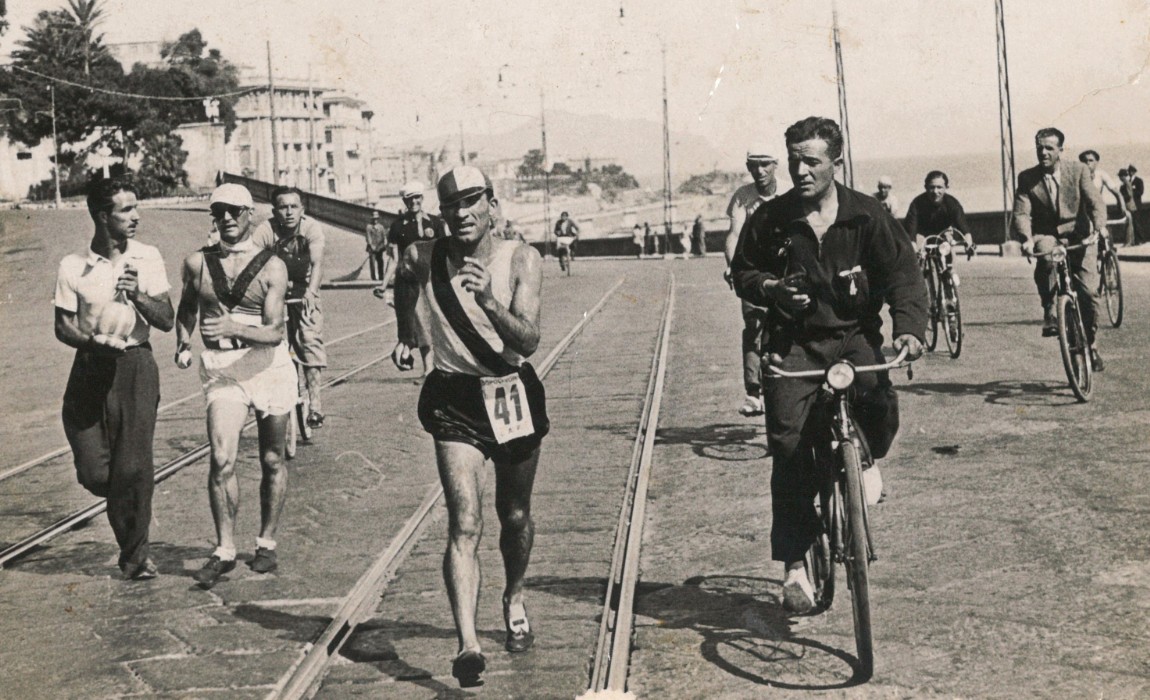



Abdon Pamich ricorda (Peppe Malaspina)
Ho conosciuto Malaspina ad una fase provinciale del Trofeo Pavesi, era il febbraio del 1952, ed esattamente dopo 30 anni moriva stroncato dal male che lo aveva tormentato per più di un anno.
Apparentemente burbero e scontroso aveva un rapporto facile con i giovani, in mezzo ai quali si trovava a suo agio, perché era un idealista, e solo nei giovani trovava ancora quegli ideali in cui lui ha sempre creduto anche da vecchio.
Era un appassionato dello Sport e della Marcia in particolare, la sua sfortuna è stata l’aver fatto parte della schiera di atleti che hanno visto sfumare gli anni migliori durante la guerra riuscì a vincere, nonostante ciò, un campionato italiano dei 50 Km nel 1941, e ad indossare la Maglia Azzurra dopo la guerra, pur avendo subito una grave ferita durante un bombardamento che gli causò non pochi guai durante le gare e cosa che gli impedì di diventare un marciatore di fama internazionale.
Nel 1950 tornato a Genova da Milano dove aveva risieduto per 20 anni, inizio la sua carriera di allenatore, ed ebbe modo di trasmettere in noi suoi allievi, il suo smisurato entusiasmo. Quando metteva gli occhi su un ragazzo non sbagliava ma, noi lo chiamammo “il Mago” per questa sua dote di riconoscere subito i talenti e per la sua capacità di far camminare anche i…. Morti.
Quando vide me, quel febbraio del ’52, che pur ero arrivato secondo su due partecipanti nei 5 Km, abbondantemente doppiato da un principiante come me, non da lui, ma da me venne e mi disse: “ci vediamo martedì, e vedrai che quello lì non lo vediamo già la prossima gara.”
Anche se a quei tempi non avevo ambizioni di battere chicchessia, (era la prima volta che marciavo) era sempre molto gratificante sentire, uno che ti parlava in un modo come se tutto ciò che diceva fosse scritto in un libro, e da quel giorno fu sempre così. “Il Mago” prevedeva tutto, ma era un mago onesto non un ciarlatano, non aveva fretta di vedere i risultati, anzi era lui che frenava la nostra esuberanza, e i suoi obiettivi erano sempre a lunga scadenza, mirava alla stabilizzazione dei risultati non ad un exploit immediato, ed aveva un grande rispetto per la personalità di ciascuno dei suoi allievi. Era un patito dello stile, “arrivare indietro, ma marciare bene” era il suo motto, e su questo motto fondò la sua Scuola di Marcia, che in 3-4- anni diede 3 Azzurri alla Nazionale, e la sua fu veramente una scuola, una Scuola senza mezzi e risorse di alcun genere, con difficoltà per gli allenamenti, in quanto l’unica pista di Genova era privata e ricordo ancora le umiliazioni e le conseguenti frustrazioni che dovevamo subire pur di poterci allenare. Ma la volontà e l’entusiasmo ci fecero superare ogni difficoltà.
Lo sport in quel periodo è stato in quel periodo è stato per noi una scuola di vita e ci ha legato in un modo tale che avevamo costituito una nuova famiglia dove Malaspina era il padre e Cignoli, De Gaetano ed io eravamo fratelli. Ed ancora oggi ci sentiamo così, perché i risultati sono venuti, e sono passati, ma questo legame è rimasto intatto.
Non voglio scivolare nel patetico, ma ho voluto evidenziare come Malaspina per l’atletica è stato un uomo che aveva quelle doti innate di allenatore che non si acquistano, né con la scienza, né con l’esperienza, che viceversa si possono acquisire, ma che non fanno da sole veramente grande un allenatore. E’ lui è stato un grande allenatore. Con lui abbiamo vissuto una vita intensa, fatta di stima reciproca, in un’interazione perfetta dove tutti i canali della comunicazione erano aperti.
Ci univa una reciproca profonda conoscenza di noi stessi, fra di noi non c’erano barriere, segreti, mistificazioni, posizioni o apparenze da difendere. Ci eravamo come si suol dire messi a nudo l’anima reciprocamente. Gli anni in cui abbiamo vissuto questa comune esperienza sono costellati di episodi, aneddoti, con i quali si potrebbe scrivere un libro voglio ricordarne uno di quelli che più è rimasto impresso.
Eravamo a Berna per i campionati Europei del 1954. L’ultimo mese, purtroppo sono andato in allenamento collegiale a Torino e sono stato lasciato in balia di me stesso, in quanto Malaspina non ha potuto seguirmi. Per varie ragioni avevo perso la condizione che avevo acquisita precedentemente, e così malconcio mi ero presentato in gara. Malaspina il giorno della gara è arrivato a Berna, e non so come, parlando un po’ in italiano ed un po’in genovese, si procuro una bicicletta con la quale credeva di potermi seguire in gara, anche se a debita distanza stanza. Una volta partita la 50 KM era riuscito ad immettersi sul percorso, ma fu subito braccato dai gendarmi, e non l’ho più visto o, meglio, sentito che nel finale di gara di cui ho un ricordo molto penoso. Era ormai notte fonda, resa ancora più cupa dalla foresta di Neufeld entro la quale si svolgevano gli ultimi chilometri della gara, e marciavo molto stanco, allo stremo delle forze. Il Percorso era indicato da boy-scouts che con una lanterna a petrolio illuminavano la tabella dei chilometri. Il Tempo che impiegavo a percorrere la distanza fra un boy-scout e l’altro era interminabile, e quando finalmente vedevo in lontananza il tremulo barlume della lanterna, avevo sempre la speranza che fra lo scout precedente e questo in vista fossero passati almeno 3 chilometri, ma puntualmente la delusione era cocente, i boy-scouts c’erano proprio tutti ad ogni chilometro. E Intanto navigano in settimana posizione, senza vedere alcuno, anche i giudici avevano abbandonato il percorso andandosene coi primi, nel buio della foresta, quando mancavano oramai 3-4 KM al traguardo, udii un ciabattare aritmico avvicinarsi alle mie spalle, che assomigliava a tutto fuorché ad un passo di Marcia. Non sapevo se sperare di vedere finalmente un essere umano e temere di essere raggiunto da un passo di Marcia. Non sapevo se sperare di vedere finalmente un essere umano o temere di essere raggiunto da un avversario che mi soffiasse il tanto faticato 7° posto perché, quando sei stanco, non ti importa più di niente, della Marcia, della posizione, ma c’era solo quella 1° Maglia Azzurra che stavo indossando che voleva e doveva ad ogni costo essere portata al di là del traguardo. Qualsiasi altra maglietta si sarebbe rassegnata a non arrivare. E cosi mentre marciavo come un automa nel buio della notte udii un grido: belinun . Nu curi ( IN GENOVESE non correre) era la voce di Malaspina che finalmente sfuggendo anche all’arresto, era riuscito nella notte a ritrovare il percorso, e che (come ho saputo poi) piombando alle spalle del Romeno Baboe, colto in fallo si cristallizzò e cosi potei conservare il 7° posto più faticato della mia lunga carriera di marciatore, un 7° posto per un esordiente, perdi più in cattive condizioni non era niente male, ed anche questo lo devo a Malaspina, che in quella notte di streghe , nella foresta di Neufeld ha fatto il mago.